
Brand and design
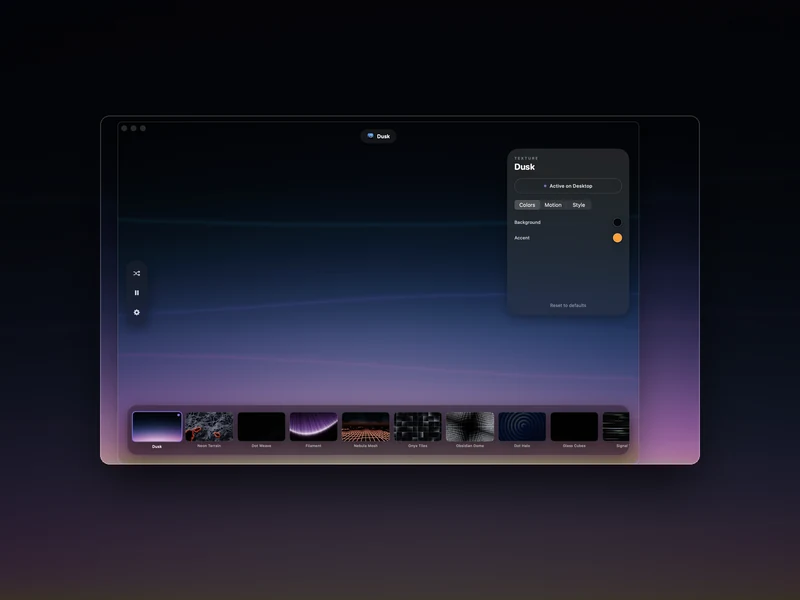
Identity and interface built as a single system, so the deck, the website and the settings screen stop looking like three different companies.

Overview
A deck, a website and a settings screen usually come from different places and end up looking like it. Treating identity and interface as one system fixes that at the root: the same colour, the same type, the same spacing, expressed once as tokens and used everywhere.
That is also what makes the work useful after we leave. A UI kit engineers can build from, guidelines with the reasoning written down, and every asset in your accounts — so the next person who needs a slide or a screen has somewhere to look.
What the service covers
Everything this work
includes, spelled out
Identity and
wordmark
The mark, the palette and the voice, built for the places they will actually live: a favicon, a pitch deck, an app store listing.
Popular under this
- Naming and wordmarks
- Logo and mark systems
- Rebrand rollouts
Design language
and tokens
Colour, type and spacing as a system with names, so design decisions survive contact with a growing team.
Popular under this
- Colour, type and tokens
- Design systems
- Design audits
Product
UI kit
The identity translated into working components, not a poster. If it cannot survive a data table, it is not a system yet.
Popular under this
- Product UI kits
- Website design
- Email and document templates
Guidelines
people use
Short, honest documentation with the reasoning included, because a rule nobody understands is a rule nobody follows.
Popular under this
- Brand guidelines
- Pitch and sales decks
- Store and social assets
How it runs
A demo every Friday, one fixed quote, and you own everything you pay for. The process is the same on every project — this is how it runs for brand and design.
Listening before sketching
We talk to founders and customers, and study the product itself. The brand is usually already there. The job is finding it and writing it down.
Directions, argued honestly
A small number of genuinely different directions with the tradeoffs stated, not thirty logo options on a wall.
The system, proven in product
The chosen direction built into real screens and real collateral before it is declared done.
Handover with reasoning
Files, tokens, guidelines and the why behind them, so the system keeps its shape after we leave.
FAQ
Asked before
most first calls
Yes, though the work is strongest when the identity is proven inside the product. Identity only engagements end with a system tested against real screens regardless.
Often, yes. A refresh that keeps earned recognition usually beats a reinvention, and we will tell you which side of that line you are on.
The mark and assets, a token set, a working UI kit, and guidelines with the reasoning written down. Everything in your accounts, owned by you.
Typically four to eight weeks depending on how much product the system has to prove itself against. Fixed quote after the first call.
Is this the work
you need done?
Tell us where you are, and we’ll tell you honestly if we’re the right team for it.